The shoe is where comfort and performance meet. You take thousands of steps in a round, and every swing starts from the ground. The first decision is the sole: spikeless or spiked. Both have their place. Here is how to choose.
Spikeless: the everyday default
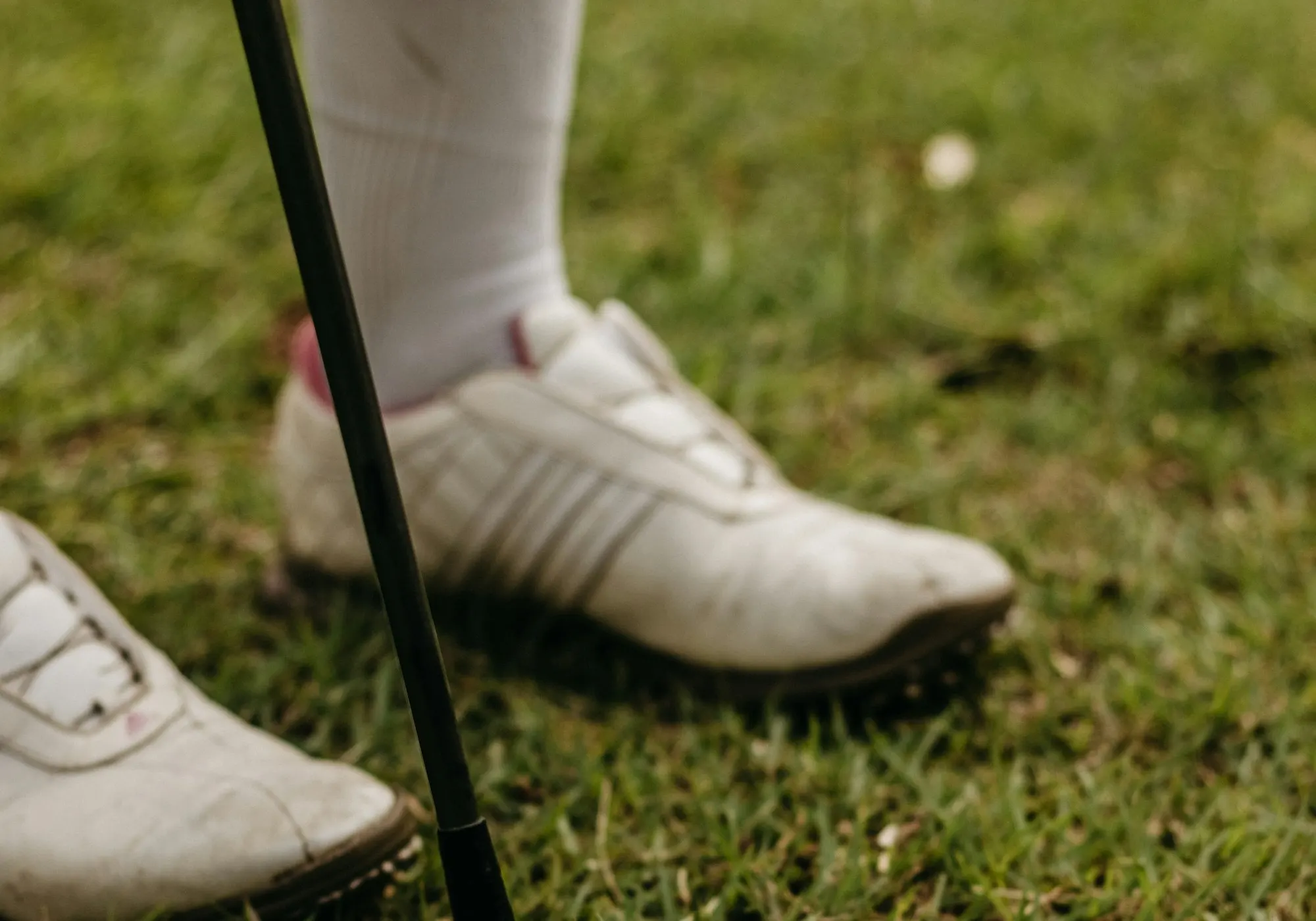
A spikeless shoe has its grip moulded into the outsole: small rubber studs and ridges instead of cleats. That makes it lighter and more comfortable to walk in, and you can wear it from the car to the course and into the clubhouse. On dry and firm ground the grip is more than enough for most golfers.
The limit shows on wet grass and slopes, where a moulded sole holds less than a cleat. The studs also wear down over time and cannot be replaced, so the grip of the shoe ages with the sole.
Spiked: maximum hold
A spiked shoe carries replaceable plastic cleats, often called soft spikes. Metal spikes are no longer allowed at most clubs because they damage the greens. Cleats dig into the turf and give you the most stable base, which you notice most in the wet, on hilly courses and at higher swing speeds.
The price is comfort: spiked shoes are usually a little heavier and stiffer, and you change them before you go inside. Check the cleats a few times per season and replace them when they are worn flat.
Which one suits you?
- You play mostly from spring to autumn and walk your rounds: spikeless.
- You play through the winter or often on wet, hilly courses: spiked, or a second pair with spikes.
- You want one pair for everything: a spikeless shoe with a waterproof upper covers most of the season.
How a golf shoe should fit
- Try shoes on in the afternoon. Your feet are slightly larger after a day on them, just like late in a round.
- Wear the socks you play in.
- Leave about a thumb’s width in front of your longest toe.
- Your heel should not lift when you walk, and your midfoot should feel held when you turn.
Women’s golf shoes are built on a narrower last, especially at the heel. If a shoe only fits in a larger size, try another model rather than sizing up.
Waterproof or not?
Morning dew soaks a shoe as thoroughly as rain, even in summer. If you start early or play all year, choose a shoe that the brand describes as waterproof, and check the product page for the waterproof warranty. For dry summer rounds a lighter, more breathable shoe is the more comfortable choice.
Make them last
- Brush grass and sand off the sole after every round.
- Let wet shoes dry at room temperature, not on a radiator.
- Use shoe trees or paper to keep the shape.
- If you play often, alternate between two pairs.
The pairs in our edit
Our women’s golf shoes include the FootJoy Traditions Wing Tip spikeless shoe, the ECCO BIOM H5 and the J.Lindeberg Ace low-top golf sneaker. Building a complete outfit? Read how to build a capsule golf wardrobe.